DRFT Labs Home

Category

Industry Trends

6 articles

Sunlight on the Data: Why Pharma's Private Labs Are Opening Their Negative Trial Files

For decades, unfavorable clinical trial results disappeared into corporate archives, creating a distorted picture of what actually works in medicine. A convergence of regulatory pressure, institutional investor scrutiny, and competitive repositioning is now compelling major pharmaceutical and biotech firms to surface that hidden record. The consequences for scientific trust — and for the pace of genuine discovery — could be profound.
After the Fold: Computational Biology's Next Frontier Moves From Prediction to Creation

AlphaFold's ability to predict protein structure from sequence transformed structural biology almost overnight, but the research community is already pressing past that landmark. The next generation of challenges—designing proteins that have never existed, modeling how molecules behave inside living cells, and engineering biological systems from first principles—demands tools and frameworks that prediction alone cannot provide.

Beyond the Qubit Demo: Quantum Computing Laboratories That Are Finally Solving Industry Problems

For years, quantum computing occupied a peculiar space in the technology landscape — perpetually five to ten years from practical relevance, impressive in controlled demonstrations but elusive in real-world application. That characterization is beginning to erode. A distinct tier of commercial quantum laboratories has emerged, working alongside pharmaceutical companies, logistics firms, and materials scientists to address genuine operational problems. The gap between theoretical promise and meas

From Petri Dish to Production Floor: Why Synthetic Biology Cannot Scale Its Way Out of the Lab

From Petri Dish to Production Floor: Why Synthetic Biology Cannot Scale Its Way Out of the Lab

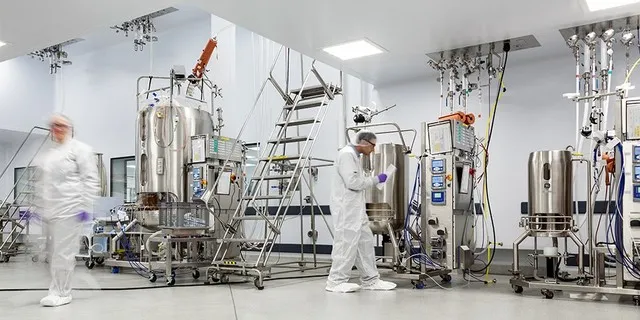
The United States biotech sector is generating synthetic biology breakthroughs at an unprecedented rate, yet a persistent gap between laboratory discovery and industrial production is preventing many of those innovations from reaching the market. Fragmented supply chains, inconsistent manufacturing standards, and chronic underinvestment in bioproduction infrastructure are collectively threatening to squander a generational scientific advantage.

Computing with Carbon: Inside the Laboratories Where Biology Is Being Programmed to Think

Silicon has defined the architecture of computation for more than half a century. Now, a generation of researchers at institutions across the United States and beyond is exploring a fundamentally different substrate: living matter. Biological and DNA-based computing represent not an incremental refinement of existing technology but a potential reconception of what a computer can be—and what problems it can solve.

Shared Blueprints, Shared Progress: How Open-Source Hardware Is Reshaping the Innovation Economy

A quiet but consequential shift is underway in hardware development: startups and established firms alike are releasing their physical designs to the public, challenging decades of proprietary convention. The open-source hardware movement is not merely an ideological statement — it represents a calculated strategic pivot that is accelerating product cycles, building loyal developer communities, and redefining how competitive advantage is constructed in the modern tech landscape.